
Gardener Docklands: Recycling and Sustainability
Gardener Docklands is committed to leading the way in sustainable rubbish gardening area solutions and an eco-friendly waste disposal area across the Docklands neighbourhoods. Our Recycling & Sustainability strategy combines practical on-site systems, borough-aware waste separation practices and measurable targets to reduce landfill, increase reuse and lower carbon from garden waste and general rubbish. This page outlines our targets, local logistics, partnerships and the low-carbon fleet that supports our work.Our primary recycling percentage target is bold and measurable: 65% recycling and reuse across all Gardener Docklands operations by 2028, moving toward a long-term ambition of 75% as infrastructure and community uptake improve. That recycling and sustainability ambition covers green waste, woody pruning, compostable material from planters and mixed dry recycling. We align with the boroughs' approach to waste separation, which typically separates organics, mixed recycling (paper, card, plastics), glass and residual waste, and we actively design our on-site bins and disposal flows to match those systems.
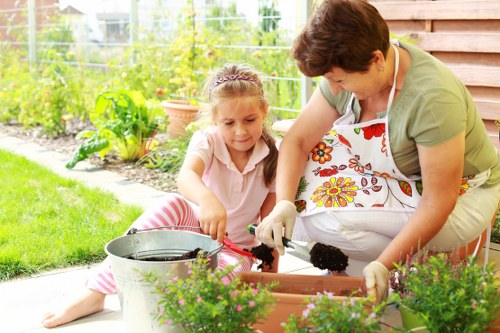 We operate a series of designated, clearly signed disposal bays within our sites to support an efficient eco-friendly waste disposal area and a thriving sustainable rubbish gardening area. Key operational actions include:
- Segregated garden waste bays for green material and woody pruning.
- Compost collection for kitchen or biodegradable material from site-based staff and events.
- Dry recycling stream for paper, card, cans and plastics to meet borough collection standards.
Our collection protocols respect the local borough separation rules: where a borough separates glass at kerbside we route glass to the local transfer station for that stream; where organics are collected separately we prioritise composting or anaerobic digestion avenues. This borough-aware approach helps to reduce contamination, increase recycling yields and ensures Gardener Docklands' materials are processed through appropriate municipal or private facilities.
 A central piece of our operational sustainability is partnership. We work with local transfer stations and material recovery facilities close to the Docklands to minimise haul distances and emissions. We also partner with a network of charities and community organisations to maximise reuse: surplus planting materials, pots, soil in good condition and furniture suitable for reuse are offered to charity reuse centres, community allotments and educational projects. These partnerships help us convert potential waste into community resources while reducing the overall carbon footprint of disposal.
Low-carbon fleet and site logistics
To reduce emissions from the collection and transfer of waste and recyclable materials, Gardener Docklands is moving to a low-carbon van fleet. We operate hybrid and fully electric vans for short-distance runs around the Docklands, and use low-emission transfer partners for larger loads. The result: lower operational emissions, quieter urban working, and improved air quality near our planting sites.Our sustainable rubbish gardening area is designed not only to separate materials but to add value: on-site composting reduces the need to import soil improvers; mulching schemes return nutrients to planters; and selective chipping of woody waste produces mulch for reuse on larger sites. We measure volumes diverted to reuse and composting monthly and report progress against our recycling percentage target internally, using those insights to refine operations and switching routing to the most efficient local transfer stations.

Partnerships, charities and community reuse
We maintain active relationships with local charities and community reuse organisations to rehome good-condition items. Rather than sending non-contaminated pots, planters and equipment to disposal, we channel them to community allotments, charity reuse centres and social enterprises that train and employ local residents. These collaborations strengthen local circular economies and help us meet our recycling and sustainability commitments in practical, social ways. Monitoring, continuous improvement and community engagement are core to our approach. We run regular training sessions for staff on correct separation of waste streams — emphasising the importance of segregating organics and avoiding contamination of dry recycling — and we audit our on-site bins to ensure compliance with borough rules. We report outcomes for each site, track diversion rates and adjust practices such as container placement, signage and collection frequency to lift performance.
Key features of our eco-friendly waste disposal area and sustainable rubbish gardening area include:
- Clear signage matching borough labels and language to reduce confusion.
- On-site composting and mulch production to close nutrient loops.
- Designated reuse channels with charities and community groups.
- Low-carbon vans for local collections and optimized routing to local transfer stations.
By integrating recycling in Docklands best practices, matched to borough separation schemes and supported by a low-carbon logistics approach, Gardener Docklands makes sustainability in Docklands practical and measurable. Our path to the stated recycling percentage target relies on infrastructure, partnership and continual staff engagement to keep contamination low and recycling yields high.
In summary, Gardener Docklands combines a targeted recycling and sustainability plan, efficient use of local transfer stations, strong partnerships with charities and community reuse organisations, and a low-carbon van fleet to create an effective eco-friendly waste disposal area and sustainable rubbish gardening area that serves both environment and neighbourhoods.